
What Military Leadership Brings to Business When Pressure Rises
Organisations still underestimate the commercial value of military leadership because they reduce it to resilience instead of understanding the judgement, accountability and trust that operational service develops.
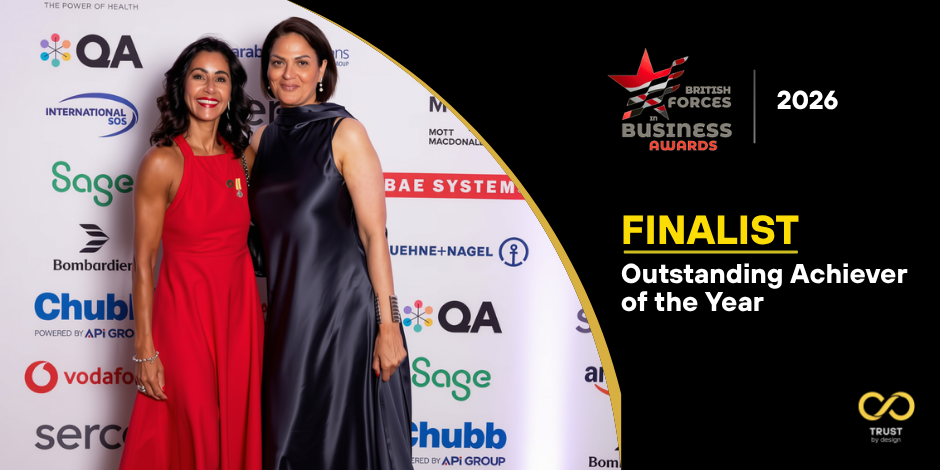
Being named a finalist for Outstanding Achiever of the Year at the British Forces in Business Awards 2026 gave me reason to reflect on something I have seen from both sides of my career. Organisations still miss some of the value military leadership can bring to business.
More than 1,500 people came together that evening to recognise veterans, reservists and military families making an impact across business.The nominees came from a wide range of sectors and roles. Military experience was being applied everywhere from employee assistance and AI to cyber security and healthcare..
The sectors were very different, but the underlying point was the same. Military experience has value long after somebody takes off the uniform. The challenge is whether organisations understand what that experience has developed and know how to use it.
Some organisations have military networks, which can create valuable community and connection. Others have gone further and made military experience part of how they identify, develop and deploy talent.
There is an important distinction between the two. A network builds community. Strategy turns experience into capability.
Military leadership in business is about more than resilience
The conversation about veterans in business often starts with resilience. I understand why, but it undersells what operational experience can develop. The more commercially relevant capabilities are judgement, accountability, emotional control and responsibility towards other people when circumstances are uncertain.
What operational experience taught me
I learned that during my deployment to Basra as a Royal Military Police Reservist.
It was unusual for women to lead in the environment I entered. During a militia uprising, higher command selected me to lead a national community policing programme, training members of the Iraqi Police Service in one of the most hostile districts in the region.
The work included arrest and restraint, crime-scene preservation and how to respond to victims of abuse. Some of those subjects had not previously formed part of their policing training while Iraq was rebuilding its institutions.
I delivered that training through an interpreter, often standing in rooms full of men while force-protection infantry waited outside the station.
The technical content mattered, but so did what happened around it. Leadership in an environment like that is tested constantly. People form a view of your judgement very quickly. They see how you control your own reactions and whether you live by the standards you expect from others.
My formal assessment described my conduct as exemplary, and commanders later requested me by name to support search and arrest operations.
People don’t follow titles alone. They follow proof.
During one incident, an RPG landed inside the compound nearby. I hit the ground, chest first.
I remember seeing the boots of one of my comrades turn away, then stop and turn back for me.
Nobody had to tell him to do that. In that moment there was no time for a discussion about values or responsibility. What mattered was the standard we had already built between us.
That experience changed the way I think about trust. It was not created by what we said we believed. It came from what people had repeatedly seen us do and what they believed they could expect from one another when things became difficult.
Under pressure, people do not rise to intentions. They fall to standards.
That is as relevant to organisations as it was to us in Basra. It is also why I think the most useful conversation about military leadership is not about transferable skills on a CV. It’s about how people behave when judgement is tested and responsibility cannot simply be passed elsewhere.
The commercial value sits in the behaviour
After more than 20 years working across organisations including Virgin, Vodafone and Deloitte, I have seen the same principle play out in much less dramatic circumstances.
Businesses invest heavily in leadership development. Yet people can leave a programme with all the right language and return to an environment where the behaviour around them contradicts what they have just learned.
A leader may say that challenge is welcome, but people watch what happens to the person who disagrees. An organisation may talk about accountability, but employees notice when difficult decisions continually move upwards because nobody wants to own the consequence.
Those behaviours affect whether people raise issues early, whether decisions are made at the right level and whether leaders have an accurate picture of what is happening during transformation.
The gap between what leaders say and what people experience is where trust begins to weaken. People start filtering information, which means issues can take longer to reach the right level. By the time leaders see the full picture, they may already be resolving problems that earlier challenge could have prevented.
This is one of the experiences that eventually led me to develop The Doughnut Principle™ | The Trust Loop. Trust has to be earned through behaviour, protected when pressure tests it and rebuilt when actions fall short of what people were led to expect.
How do you develop leadership under pressure before it is needed?
Operational environments do not give you the luxury of separating leadership theory from behaviour. Decisions have consequences, information is often incomplete and people see very quickly how you respond.
Business should not need a crisis to discover how its leaders will behave.
That is why I use simulation in my work with leadership teams. Rather than talking only about what good leadership should look like, a simulation creates enough pressure and ambiguity for people to practise it.
And pressure does not have to mean a major crisis. It can be somebody questioning your judgement, giving you criticism you do not particularly want to hear or challenging a decision you have already committed to. You see what happens when ego enters the room and whether a leader remains open to challenge when it becomes personally uncomfortable.
It also creates space to examine what happens when behaviour crosses a line. If inappropriate conduct comes from somebody senior, commercially important or difficult to challenge, does the organisation still hold the standard it says matters? Those moments tell people far more about the culture than a policy ever will.
Simulation lets you see whether decision ownership stays where it should, whether someone will challenge a more senior colleague and whether an issue is escalated early enough to change the outcome.
The purpose is not to catch people out. It gives leaders somewhere to examine their judgement and behaviour before the consequences are attached to a live transformation, restructure or another high-pressure situation.
That is one of the most useful lessons business can take from operational environments. You do not wait for the critical moment to decide what your standards are. You build and practise them before you need them.
From military network to business capability
The British Forces in Business Awards showed how widely military experience is already contributing to UK organisations.
The next question is what employers do with that experience. Is it primarily something to celebrate, or do they understand how to use the capability it has developed? Both have value, but they serve different purposes.
Military service does not automatically make somebody a good leader, and we should not assume every veteran leaves with the same qualities. What operational experience can provide is evidence of how somebody has behaved when responsibility was difficult to avoid and consequences were immediate.
That matters when organisations need leaders who can navigate transformation, make sound decisions without perfect information and create enough trust for difficult issues to surface before they become bigger problems. The value is not simply that someone served. It is what that service developed and what their behaviour has already proven.
The bigger opportunity around military leadership in business is understanding how experience developed under pressure can strengthen leadership capability across the organisation.
What pressure reveals
Being recognised as an Outstanding Achiever finalist was something I was proud of, particularly alongside people applying their military experience in completely different ways.
But the evening also reinforced why this subject matters beyond the veteran community.
Modern organisations rarely deal with one change at a time. Leaders are often making decisions while the organisation around them is changing, without all the information they would ideally want.
In those conditions, people are quietly making the same judgement I saw made in Basra: Can I trust how this person will behave when the situation becomes difficult?
The circumstances are very different, but the judgement people are making is remarkably familiar. My comrade did not turn back for me because a leadership framework told him to. We had established that responsibility towards one another long before that moment.
That is the part of military leadership I believe business has the most to learn from.
People may listen to what a leader says, but when pressure rises, they also judge whether to follow based on what that leader has already shown them.
I bring this approach into my Leadership Under Pressure Lab, where leadership teams practise decision-making, challenge and escalation before a live transformation puts those behaviours to the test.